Omolara Olatunji ’28
In Baltimore City where I witnessed communities come together to tackle challenges in their communities, fighting passionately for social justice stands in stark contrast to Capitol Hill where the disconnect between the offices, the white house and the plight of the people are as tall as the walls of the hill. After walking out of the capitol hill, I couldn’t help but compare the experience and feeling of hope I had after meeting organizations like the Liberty Grace church, Our Daily Bread soup kitchen, the Mosque, and the Black Church Food Network over the past 4 days in Baltimore with the feeling of confusion I left the capitol hill with. The community I had seen and experienced in Baltimore showed me the resilience and strength of the people as they show up in their respective communities and together reimagine food justice across the Baltimore city.
I looked back on the trash picking experience with Marc where he told us all about his plans to make his community greener and how they come together to make their community better. I looked back on the glitter in Pastor Theresa’s eyes as he spoke about how the church could better serve the community, and his forest school where he hopes to connect the younger generation with nature. I looked back on the enthusiasm of the volunteers at our daily bread soup kitchen as they served their customers food without stripping them of their dignity and humanity. I looked back on Titi telling us about the plethora of programs they had from helping ex-convicts reintegrate into society to helping the people in underserved communities get their legal documents. I looked back on the Mosque community as they spoke to us about the intersection of their faith with social justice, and how they show up in their community to promote food justice by serving over 500 plates of food daily during Ramadan. I looked back on how the Black Church Food Network is empowering their community by using the church land to grow and distribute food in their community in spite of all the barriers that have historically prevented them from accessing healthy, nutritious food. For 4 days, I met these different organizations and people that are putting in their whole lives into social justice and helping their community get better in spite of everything that stands against this goal. Even right there in DC, we were working with Bread for the World, another organization that has made food justice and eradicating hunger their goal.
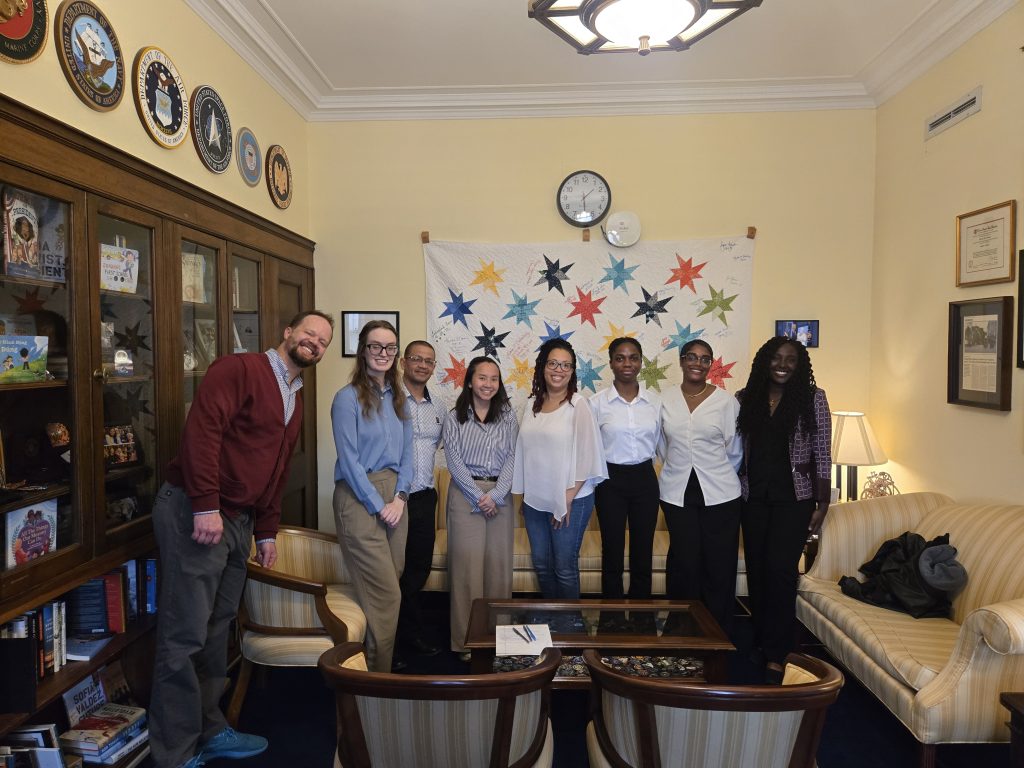
However, on the capitol hill, the first meeting felt like a battle of words. The plea was simple; let’s not cut SNAP, let’s implement reforms at the federal level that closes the college snap gap, and let’s fund international food aid programs. In the first meeting, there was an argument over whether or not the federal government was right to withdraw SNAP funding over a supposed error rate of states. In the second meeting with another rep staff, she had to put down her persona as a worker on the capitol and put on her persona as a citizen and as a mother to say she doesn’t fully understand what was going on but she completely understands the situation and would be sure to do her research and make the rep aware. As I walked down the road from Capitol hill back to Bread office, I asked myself, Why is the capitol confused? Why do they need to be told to act in the interest of the people? Why is there no community like the one I saw in Baltimore in the Capitol? The Capitol has resources to support communities and organizations like the ones I saw in Baltimore and doing this would go a long way to solve food insecurity in our world, but why doesn’t the capitol know that even though they were elected to do just that? If the communities I saw in Baltimore lived everyday showing the meaning of “We the people”, the capitol showed me “I the person”.
My feelings of confusion and hopelessness were laid to rest during the advocacy workshop. During this workshop, Rob’s words on the need to focus on organization rather than mobilization resonated with me. I finally recognized that the experiences I had in Baltimore were made possible by the power of the community and good organization. I recognized that the community would always stand strong against injustice even though it doesn’t look like it in our world today. Therefore, I leave Washington with the newfound resolve to confront social justice issues I am passionate about by creating structures where the people closest to the issue shape the strategy for change.