We Are Our Own Heroes

Omuhle Ndhlovu ’27

In Baltimore, community members are not waiting for another bill to be voted on or another policy to be debated before people’s dignity can be restored. They are confronting injustice with something no one can take away from them: their own power.

They are not asking for permission to create change. They are showing the unwavering power of Ubuntu (the belief that our humanity is bound together), and so in restoring others, we restore ourselves.

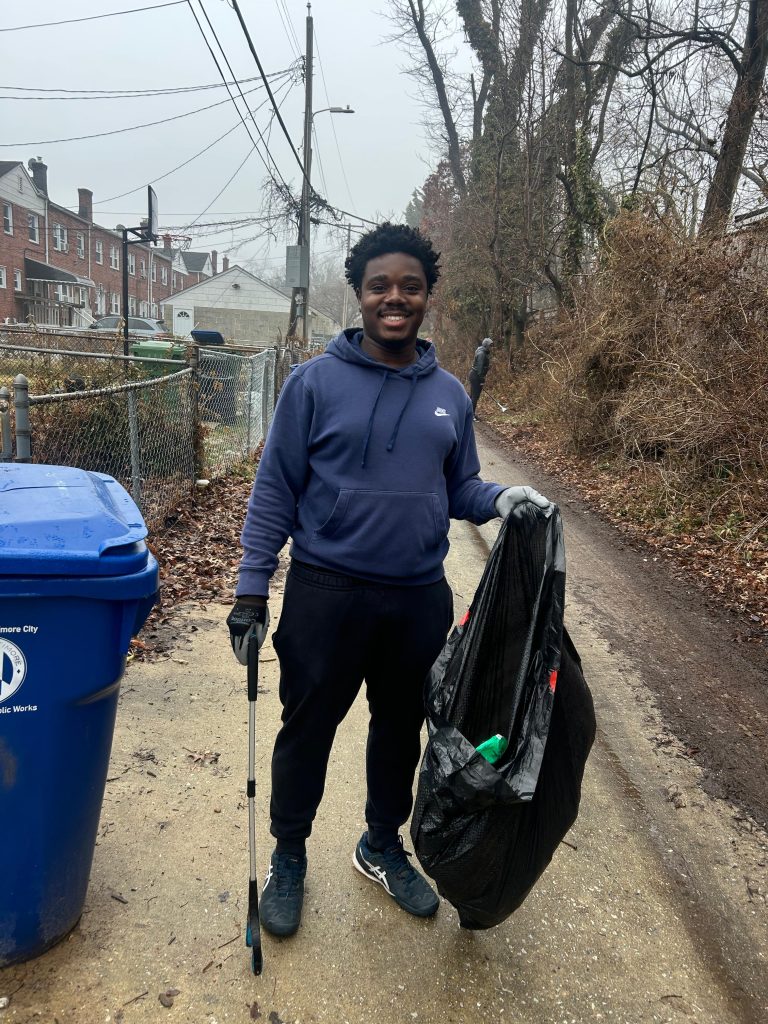
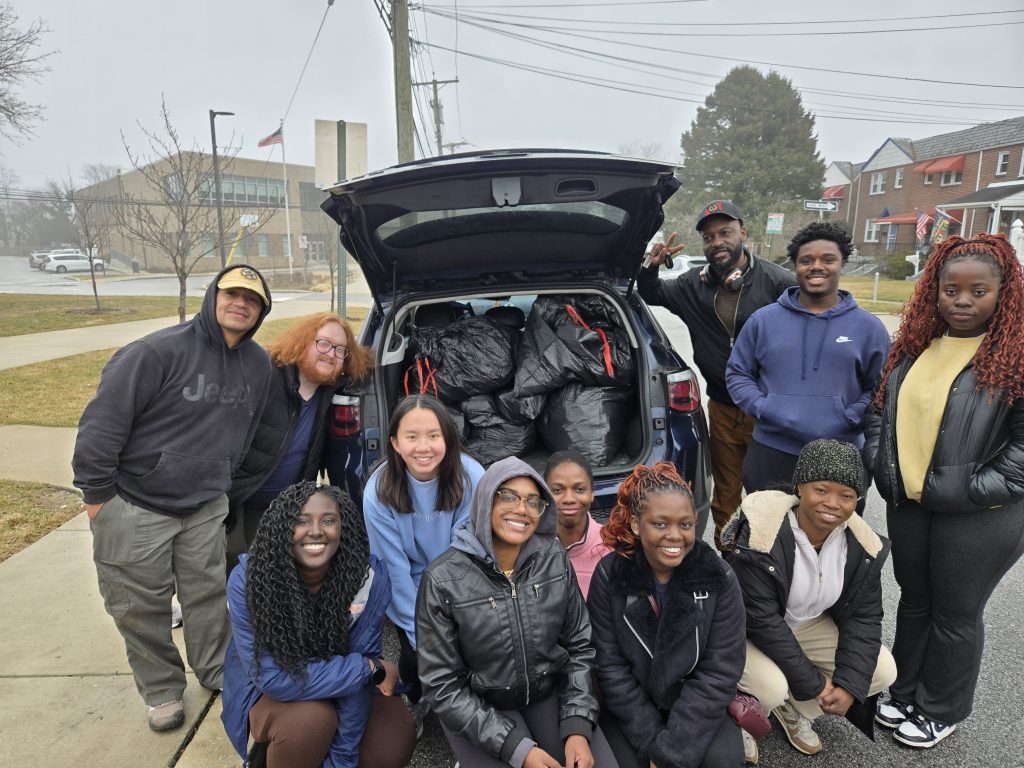
Near Govan Elementary School, Marc sees the trash and litter in his neighborhood as an opportunity to build meaningful connections within the community. Reverend Heber captures this spirit when he says, “The Avengers are not coming to save us… we are our own heroes.” Through the Black Church Food Security Network, he is shifting the status quo in Black communities across the United States through gardens owned and run by local residents, transforming how communities access food.

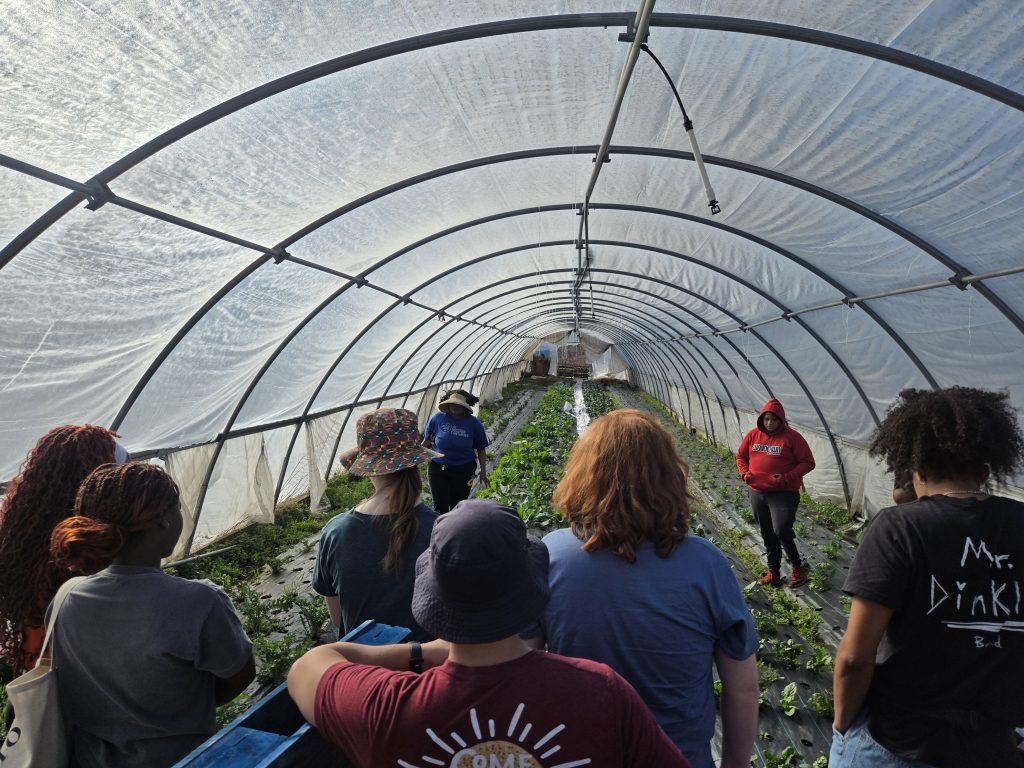
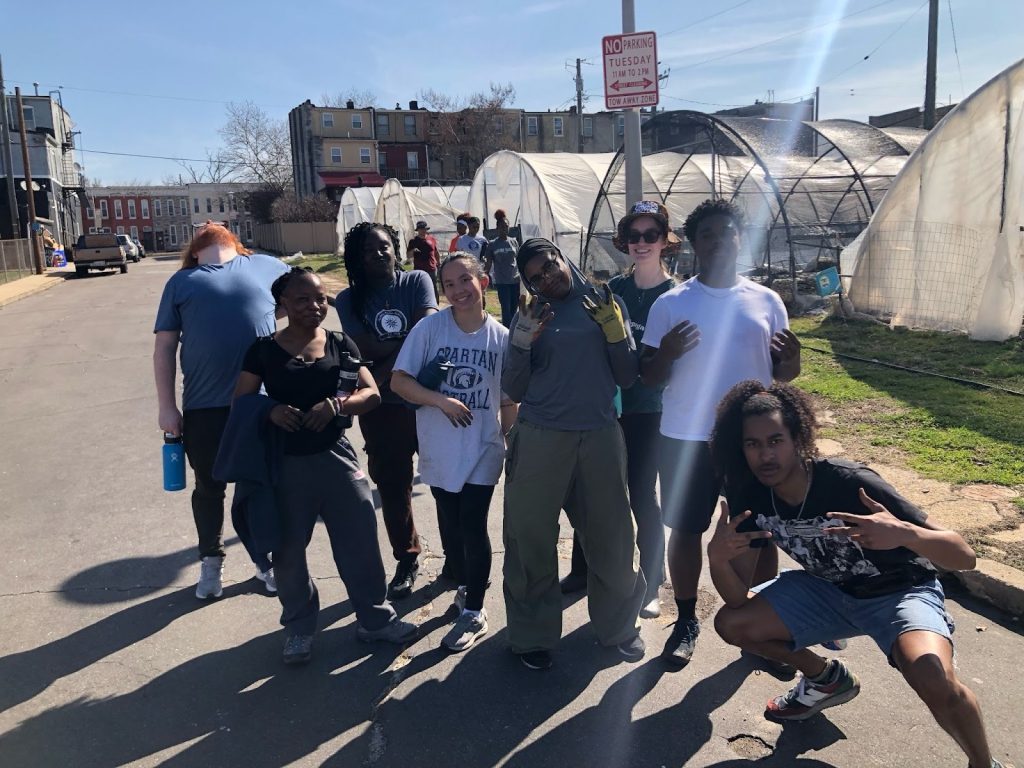
At Strength to Love Farm, Shea McCoy and Corey are growing vegetables in a food apartheid neighborhood. They are filling a gap that grocery stores refuse to address because profits would be too low. In class, Kurt once reminded us that “we depend on a profit-driven industry to provide us food.” Access to food should never depend on profit margins. The real question should be: How do we ensure that every resident lives within a reasonable distance to fresh, healthy food?
My favorite part of this experience was witnessing the intersection of faith and food justice.

Continue reading “We Are Our Own Heroes”
Love, Peace, and Farming

Marie Alexis ’26

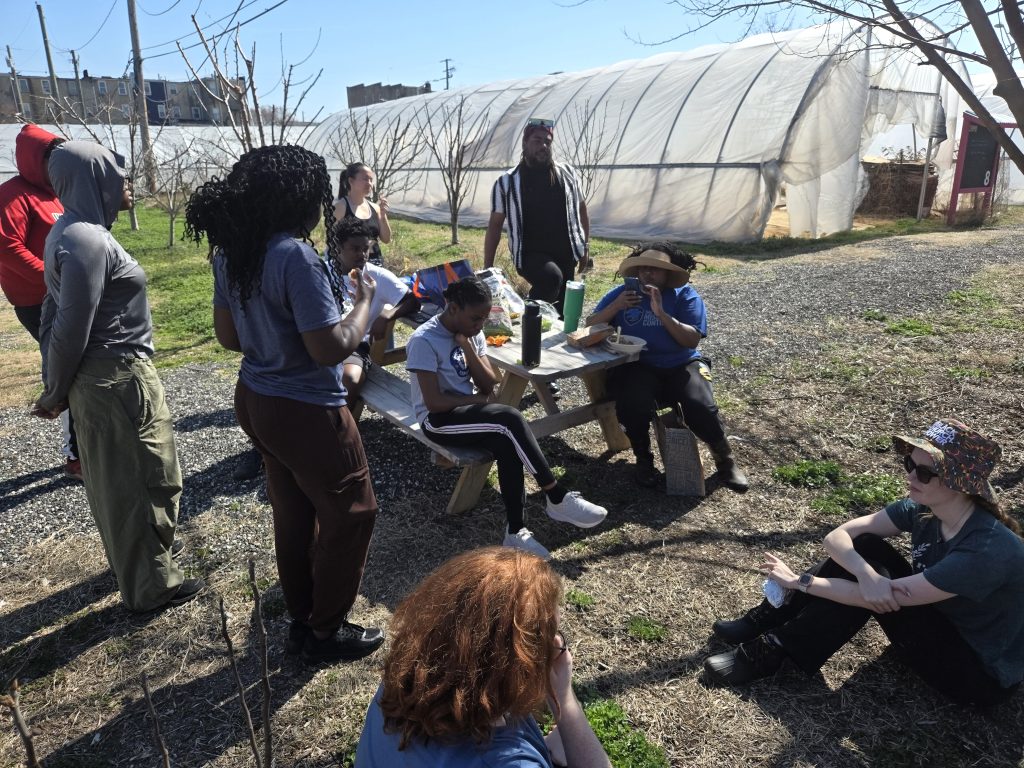
Farming is a symbol of love, peace, humility and selfcare.  Growing up I used to farm with my mom and I never seem to appreciate it until now that I’m older, that I learned to appreciate farming and its benefits. Today I volunteered at the Strength to Love II farm, which is a community based program in West Baltimore to help fight food insecurity. The program uses a 1.5 acre land to farm and support people with employment and empower their community. In a time where food insecurity is one of the most significant problems of our population, the mission of this program could not have been more fulfilling. Strength to Love II farm provides the citizens of the neighborhood with fresh produce that they grow in the same neighborhood, they also provide job opportunities for the youth in the neighborhood. This initiative is creating a long term stability and hope for the community of Sandtown-Winchester, in West Baltimore. 

Continue reading “Love, Peace, and Farming”

The Stark difference between the Capitol and the Community.  

Omolara Olatunji ’28

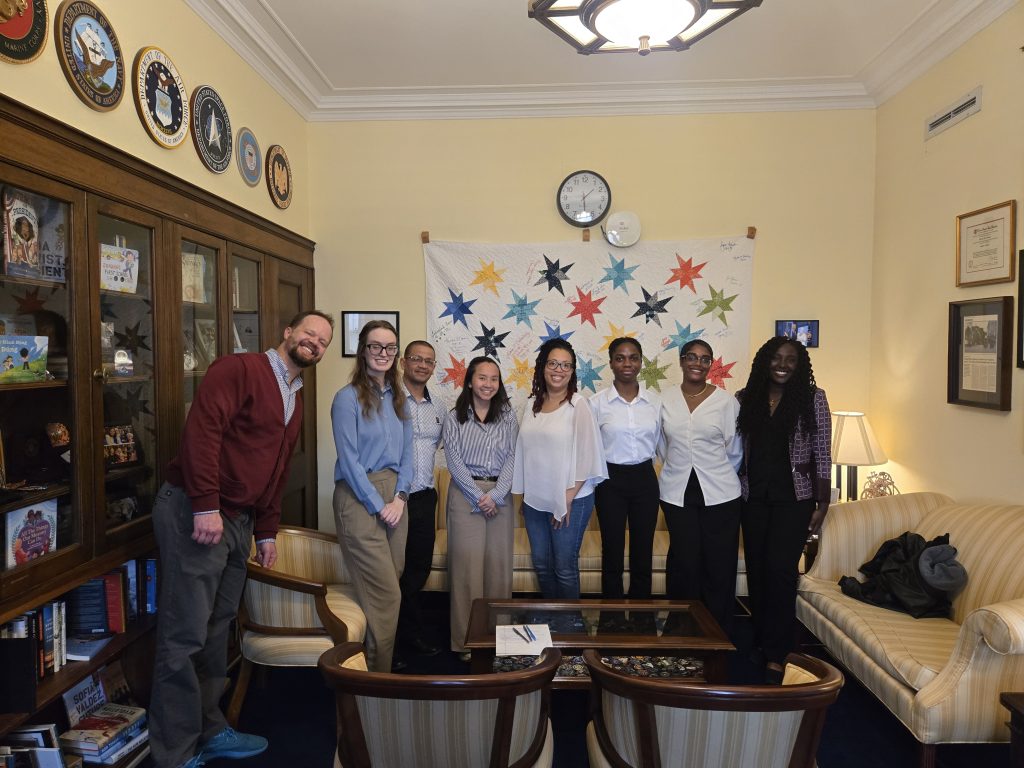
In Baltimore City where I witnessed communities come together to tackle challenges in their communities, fighting passionately for social justice stands in stark contrast to Capitol Hill where the disconnect between the offices, the white house and the plight of the people are as tall as the walls of the hill. After walking out of the capitol hill, I couldn’t help but compare the experience and feeling of hope I had after meeting organizations like the Liberty Grace church, Our Daily Bread soup kitchen, the Mosque, and the Black Church Food Network over the past 4 days in Baltimore with the feeling of confusion I left the capitol hill with. The community I had seen and experienced in Baltimore showed me the resilience and strength of the people as they show up in their respective communities and together reimagine food justice across the Baltimore city. 

Continue reading “The Stark difference between the Capitol and the Community.  “

A Recipe for Change on Capitol Hill

Maya Fetzer ’26

I always thought lobbying was only when a rich man in a fancy suit told politicians to change legislation in exchange for campaign donations. I would have called all lobbyists evil people. However, today’s journey to Capitol Hill showed me that lobbying is a tool in an organizer’s tool belt to make long-term, systemic change that can help bring power to individuals who need to see sustaining changes. 

Continue reading “A Recipe for Change on Capitol Hill”

Planting with a Purpose

Liana Komeng ’27


The past few days in Baltimore have truly been an eye-opening experience. It was one that consisted of service, community, reflection, hope, but also a deepened sadness; and it all started with our first day. Upon arrival in Baltimore, we began our work with the Black Church Food Security Network, partnering with Community Greens, which is an organization involved in not only providing a clean space for Baltimore residents on a short term basis, but also looking for new innovative ways to sustain and maintain their continuous progress addressing food insecurity. It was remarkable to see individuals focus on not just providing enough food, but healthy, nutritional options as well. They were extremely dedicated to breaking down the dangerous, racialized stigmas that surround the Baltimore community, while subsequently fighting to maintain a culture of unity. Throughout this first day, we were introduced to one of the local community partners, (who goes by the name Marc) and were able to hear how his love for his community only encourages him day by day, month by month, year by year, to continue to fight for it; and not with the use of outside protests or just dialogue, but through active, peaceful engagement. Marc was a personified version of the phrase “be the change you want to see” with so many ambitious, yet practical steps he mentioned that he intended on taking in order to build a better future for Baltimore. But, this experience, believe or not, was not the only time in our journey through Baltimore that I was able to see REAL people take on REAL initiatives to fight REAL issues of food insecurity in the city. 

Continue reading “Planting with a Purpose”

Strength to Love Farm II: Sustainable Agriculture Meets Workforce Development in West Baltimore

Elliott Centeno ’26

America’s systemic inequalities bear a costly burden on citizens in low income communities across the city of Baltimore.  Specifically, food accessibility is a component of these systemic failures. But between the injustices there are organizations at work that are functioning to assist in improving access to affordable nutrients in their communities.

Continue reading “Strength to Love Farm II: Sustainable Agriculture Meets Workforce Development in West Baltimore”

Action Together

Mikaili Green ’26

The first thing I remember noticing when I arrived in Baltimore is how the heaviness of the environment was so apparent. On the way in, I saw a homeless man wave at us. He was not holding a sign or asking for anything, just waving. It stuck with me as it felt more “human” than a lot of the other things that I saw around him.
Parts of Baltimore itself felt very dense and worn down. Trash filled the streets and sidewalk – mostly cans, plastic bags, and newspapers; however there were a multitude of other types of trash littering the ground. Graffiti was everywhere, covering the sides of buildings and rooftops. The row houses made up most of the landscape of the city giving it a sense of density and repetition. The sky above was gray and overcast, making Baltimore feel somewhat “frozen” in time as if it was all built at once and then abandoned.

Continue reading “Action Together”

A New Perspective on Baltimore

Favour Okonkwo ’28

Though I live only an hour away from Baltimore, the stories I’ve heard my entire life never aligned with the reality I experienced today—even if it was only my first day. The connotations surrounding Baltimore were never good; I was always told, “be careful, there are gangs,” or “it’s dirty and violent.” However, my experience today offered a transformative new perspective.

I had the opportunity to pick up trash in a local neighborhood, where we met a man named Marc. Originally from Mississippi, Marc has lived in Baltimore for three years. There was a visible spark in him when he spoke about this community. I became fascinated by how he saw beauty and potential where everyone else saw decay.

Marc holds an MBA and a background in International Studies. Often, when people see someone with that level of education working a “community job,” they don’t see it in the brightest light. But for Marc, this isn’t just a job—it’s a transformation. He is part of a movement to help neighborhoods succeed under structures that often seem designed to prevent progression.

Continue reading “A New Perspective on Baltimore”